
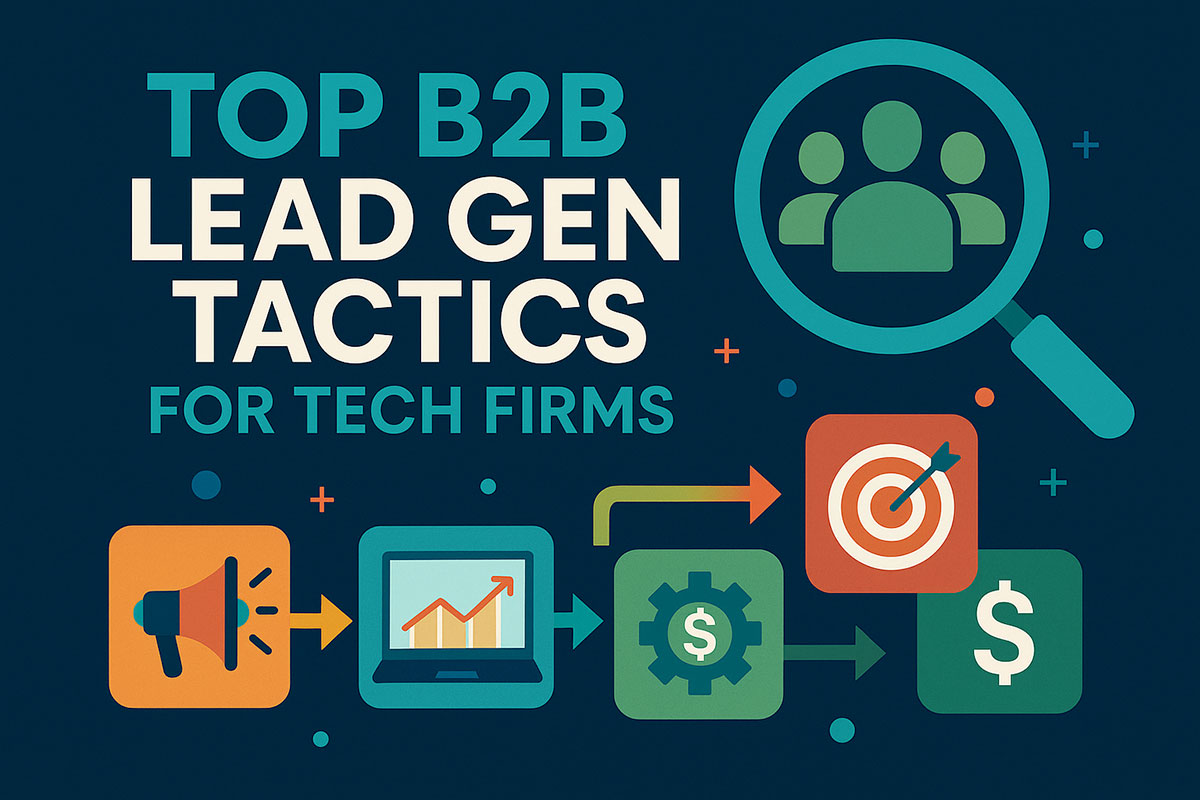
Top B2B Lead Gen Tactics for Tech Firms

In the competitive tech landscape, effective B2B lead generation tactics are the difference between a healthy pipeline and stalled growth. This guide breaks down practical, proven approaches that tech firms—SaaS, IT services, and product companies—can deploy to attract and convert high-quality prospects.
Tech buyers navigate complex decisions with large buying groups and high expectations. Your lead gen must blend value-rich content, precise targeting, and consistent nurturing to win.
Why B2B Lead Generation Matters for Tech Firms
Tech purchases are rarely impulsive. Buying groups include multiple stakeholders—from IT and security to finance and operations—each with unique goals. That means your lead generation engine must do more than capture emails; it must educate, de-risk, and guide teams through a multi-step journey. Research from industry analysts notes that typical B2B buying committees often involve six to ten stakeholders, which naturally lengthens cycles and increases the number of questions prospects need answered. Linking pipeline growth to reliable programs—content, events, and outbound—helps your team stay visible and helpful across that journey. See Gartner’s overview of the B2B buying journey for context on stakeholder complexity and buyer enablement.
For tech firms, this complexity is an opportunity. You can win market share by becoming the most useful teacher in your niche: publish practical guides, ROI frameworks, integration checklists, security overviews, and case studies that mirror the information buyers demand. Doing so earns more first meetings, increases demo attendance, and elevates sales acceptance of marketing-sourced leads—especially when sales and marketing align on the same account list and qualification criteria.
Account-Based Marketing (ABM): Precision for High-Value Accounts
Account-based marketing for B2B lead gen concentrates your resources on the accounts most likely to convert and expand. Instead of broad campaigns, you build coordinated plays for named companies and named people. For tech firms with clear ideal customer profiles—industry, tech stack, company size, compliance needs—ABM improves efficiency and sales alignment.
How to run ABM that actually converts
- Define ICP and tiers: Identify firmographics (industry, size), technographics (cloud, CRM, data stack), pain indicators (downtime, compliance exposure), and segment into Tier 1–3.
- Map buyers and pain points: CIOs care about risk and cost; operators care about tools and workflow fit. Build content per role.
- Create a content spine: For each segment, publish a problem brief, ROI calculator, architecture diagram, integration guide, and a proof case.
- Coordinate channels: Pair targeted ads, warm outbound, and executive touches (email + LinkedIn + events) on the same weekly calendar.
- Measure account progression: Track key movements: new contacts, engaged roles, meeting set, mutual action plan started, opportunity created.
Mini case (Healthcare SaaS): A compliance-focused SaaS vendor targeted regional hospital networks (Tier 1) with a HIPAA integration guide, role-based email cadences, and solution workshops. Within two quarters, meeting rates rose 28% and average deal size increased due to multi-product interest.
Inbound Engine: Content Marketing that Attracts Qualified Buyers
Inbound remains one of the best B2B lead generation strategies for technology companies because buyers seek answers long before they talk to sales. Blogs, comparison pages, technical docs, webinars, and ROI frameworks compound over time—capturing demand whenever prospects search. Many industry roundups have reported that businesses with active blogs generate significantly more leads than those without, reinforcing the compounding value of consistent publishing.
Build a content system (not random acts of content)
- Pillar pages + clusters: Ship a comprehensive pillar (e.g., “Zero-Downtime Migrations”) and 6–10 cluster posts (checklists, benchmarks, vendor comparisons) that interlink.
- Gated content with a purpose: Gate only high-intent assets (ROI tools, templates, technical implementation guides). Keep early education open.
- Bottom-funnel proofs: Case studies by vertical, with metrics, timeline, team, and stack. Include “what almost went wrong” to build trust.
- Repurpose: Turn webinars into clips, long posts into carousels, and docs into one-pagers for sales follow-up.
Mini case (Fintech): A payments API company launched a “Cost-to-Serve” calculator and a “Chargeback Playbook.” Organic leads rose 33% in four months, and SDRs used the calculator in outbound to start ROI-first conversations.
LinkedIn: The Primary Network for B2B Tech Decision-Makers
LinkedIn lead generation for B2B technology companies is powerful because targeting maps directly to job titles, functions, and industries. Combine Sponsored Content, Document Ads, and Lead Gen Forms with Sales Navigator lists for layered reach: brand air cover, mid-funnel education, and sales conversations.
Tactics to maximize pipeline from LinkedIn
- Use Document Ads for technical assets: Architecture diagrams and “How it works” PDFs drive high intent without a landing page.
- Segment by buying role: Run separate ads for executives (outcomes), managers (workflows), and practitioners (features, integrations).
- Retarget site visitors: Serve case-study clips and ROI snippets to engaged accounts to move them to a demo.
- Coordinate with SDRs: Have reps like/comment on target-account threads and send value-forward InMails referencing your latest resource.
Mini case (Cloud security): A cloud security vendor used Document Ads featuring a “Shared Responsibility Model” guide plus Lead Gen Forms. Demo requests increased 40% and cost per lead dropped as sales held higher-quality conversations with security owners.
Email Marketing Automation: Nurture Long Tech Buying Cycles
Email marketing for B2B lead generation in tech wins when it’s segmented and behavior-based. Drip programs should reflect buyer stage and role, not a one-size-fits-all newsletter. Industry sources frequently cite that segmented email campaigns outperform batch-and-blast, driving outsized revenue impact; this aligns with the long, information-heavy tech buying journey.
High-performing nurture structure
- Stage tracks: Educational (problem, trends), Solution (approaches), Vendor (why now, ROI), and Onboarding (implementation path).
- Role tracks: Executive (outcomes), Manager (workflow fit), Practitioner (setup speed, integrations).
- Trigger rules: Page views, asset downloads, event attendance, pricing interest, or rep activity update the journey.
- Sales handoff: Auto-create tasks when ICP leads hit a score threshold; include last three content touches for rep context.
Mini case (DevOps tooling): A CI/CD platform segmented nurtures by role and stack (containers vs. serverless). SQLs rose 24% and time-to-meeting shortened because prospects arrived educated on integration steps.
Outbound Sales Tactics for B2B Tech Firms (That People Actually Reply To)
Outbound sales tactics for B2B tech firms work when they’re specific, respectful, and helpful. Pair warm outbound with ABM: when a target account consumes content or visits pricing, trigger a short, value-dense sequence.
Outbound that aligns with modern buyers
- Short, focused emails: 4–6 sentences with one problem and one resource (e.g., “We cut query costs 27% for retailers—here’s our checklist”).
- Multi-touch, multi-channel: Email + LinkedIn + voicemail over 10–14 days; keep tone consultative.
- Use proof early: Lead with a metric and a named peer (with permission) or an anonymized case if required.
- Offer a useful “first meeting”: Make it a short working session: architecture review, security scope, or analytics audit.
Demand Generation: Creating (Not Just Capturing) Market Interest
Demand generation strategies for technology businesses prime the market months before pipeline shows up. The goal isn’t only form fills; it’s familiarity with your POV and the problems you solve. Pair educational webinars, community AMAs, and conference talks with consistent social posting from your technical leaders.
Programs that build durable awareness
- Monthly webinars: Alternate deep technical sessions with ROI use-cases; editorial calendars follow your product roadmap.
- Partner marketing: Co-author content with integration partners; run joint workshops to borrow trust and reach.
- Analyst alignment: Brief relevant analysts; summarize category insights in plain language posts.
Inbound vs. Outbound: When to Use Each
| Approach | Best When | Primary Strength | Primary Weakness |
|---|---|---|---|
| Inbound | Buyers search actively; long education cycles | Compounds over time; lowers blended CAC | Slow start; requires consistent publishing |
| Outbound | Well-defined ICP; high ACV targets | Immediate motion; precise account reach | Can be costly; requires strong messaging |
| ABM (Hybrid) | Concentrated target list with clear value prop | Deep personalization; sales–marketing unity | Resource intensive; needs tight coordination |
Measurement: Proving That Your Tactics Work
Lead gen isn’t a set-and-forget effort. Define a simple scorecard with marketing, sales, and finance so everyone sees the same reality.
Scorecard metrics to track weekly
- Leading indicators: Content views by ICP, engaged accounts, new buying-role contacts, event/Webinar attendance.
- Pipeline indicators: MQL→SQL rate, meetings set, opportunities created, stage-to-stage conversion.
- Revenue indicators: Win rate by segment, sales cycle length, ACV, payback period.
Close the loop by tagging each asset and campaign. When a deal closes, capture which plays influenced discovery and win reasons. Feed this back into content, targeting, and SDR talk tracks.
Three Industry Mini Case Studies
Healthcare Technology
A patient-engagement platform built a “HIPAA-Ready Architecture” series (pillar + webinar + checklist). ABM targeted hospital systems with role-based emails to compliance and IT. Result: 19% lift in Tier-1 meeting rates and faster security reviews.
Financial Services Technology
A treasury SaaS launched CFO-focused ROI tools and LinkedIn Document Ads. Sales used a two-email sequence offering an executive working session. Demo-to-opportunity conversion improved by 22% quarter-over-quarter.
Retail/eCommerce Technology
An eCommerce performance vendor paired comparison pages with an “Image Optimization ROI” calculator, then retargeted visitors with case-study clips. Pipeline from retail brands grew 31% with higher win rates due to clearer business cases.
Bonus: Common Mistakes Businesses Make When Initiating B2B Lead Generation
- Starting without an ICP: You cannot personalize or score effectively without a defined ideal customer profile.
- Measuring only MQLs: Track accepted meetings, stage movement, and revenue—what sales actually values.
- Over-gating early content: Gate late-stage tools; let educational content spread freely to expand reach.
- Uncoordinated channels: Ads, email, SDR, and events should run one unified weekly theme per segment.
- Skipping attribution hygiene: If UTM discipline slips, you cannot scale what works.
FAQ: People Also Ask
What are the most effective B2B lead generation tactics for tech firms?
A balanced mix of ABM, inbound content systems, LinkedIn campaigns, segmented email nurtures, and targeted outbound delivers reliable pipeline.
How should SaaS companies approach lead generation?
Anchor on pain-specific content (implementation, ROI, security), product-led assets (demos, trials), and lifecycle emails that match user behavior.
Is LinkedIn still worth the spend for B2B tech?
Yes. It offers unmatched targeting by role and industry. Use Document Ads, Form Fills, and Sales Navigator lists to move from awareness to meetings.
How do we shorten long B2B sales cycles?
Give buying groups exactly what they need next: integration guides, ROI calculators, and security summaries—then coordinate sales follow-up around those moments.
What should we track to prove ROI?
Track engaged accounts, meetings set, opportunities created, stage conversion, win rate, ACV, and payback. Review by segment monthly.
Ready to Transform Your Business?
Want a pipeline program built for the way B2B tech buyers actually evaluate and purchase? Our team in Vancouver supports firms across Canada and the U.S. with lead generation, digital marketing, and SEO—all aligned to your ICP and revenue goals.
Further reading: Gartner: The B2B Buying Journey


